Strategy & Direction
Priorities · Portfolio · Ecosystems
We create maps that connect strategy, culture and processes to teams’ everyday work. Visual storytelling and collaborative activities give shape to the conversations your organization needs to have.
Presentations, training and documents can deliver the content — without making sure everyone builds the same understanding of it.
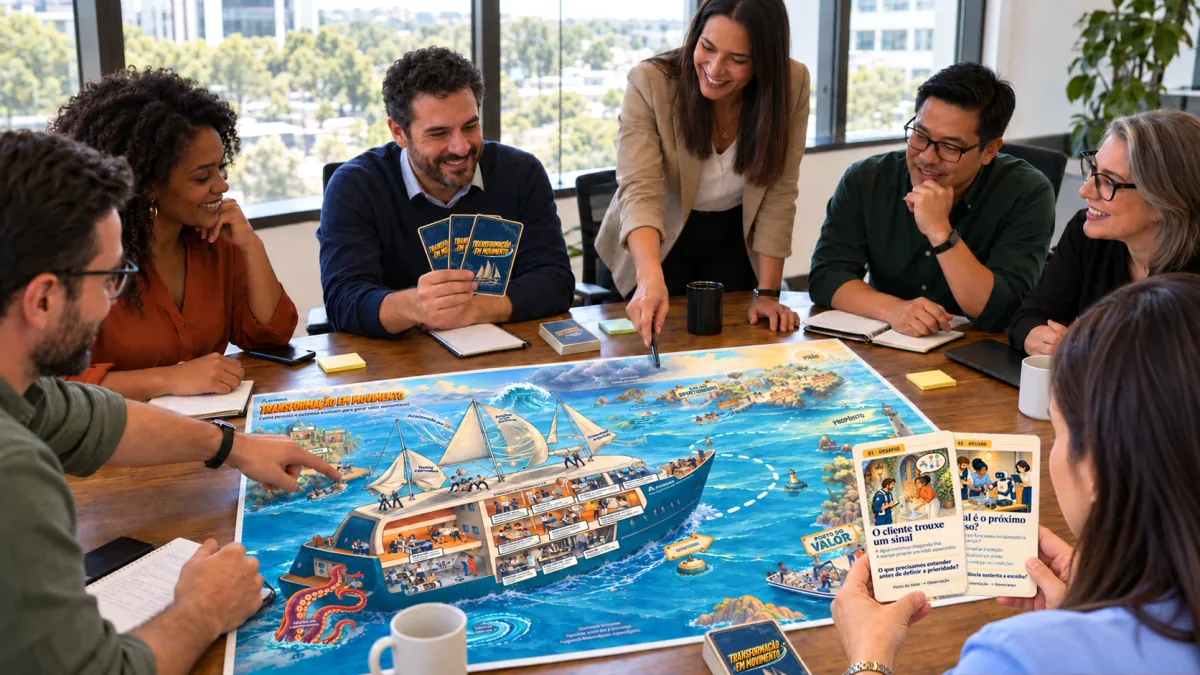
When people can see the topic, discuss it and relate it to their own work, understanding stops being individual.
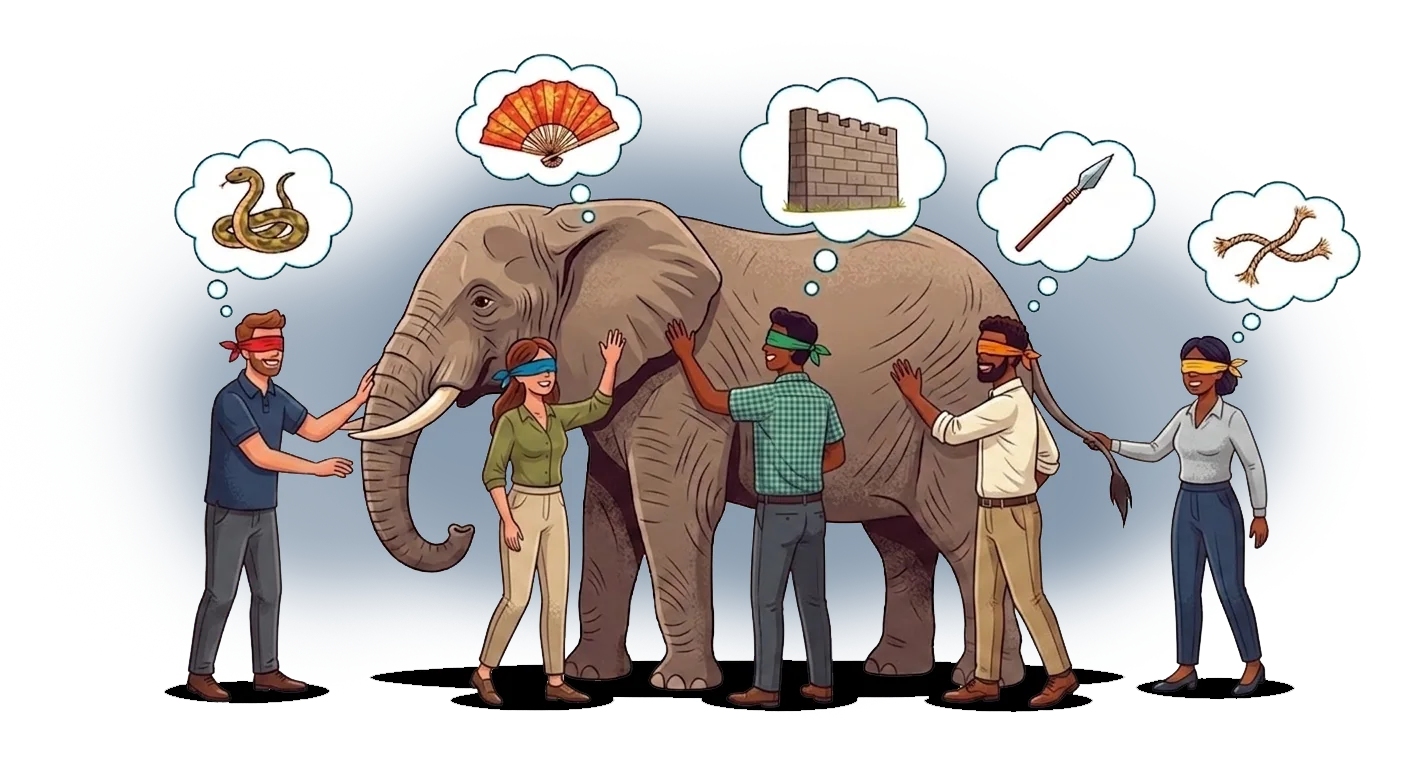
Each map is designed to help people explore situations, discuss choices and connect the topic to their own work. Activities, materials and preparation are shaped around the challenge.
click the points in the scene
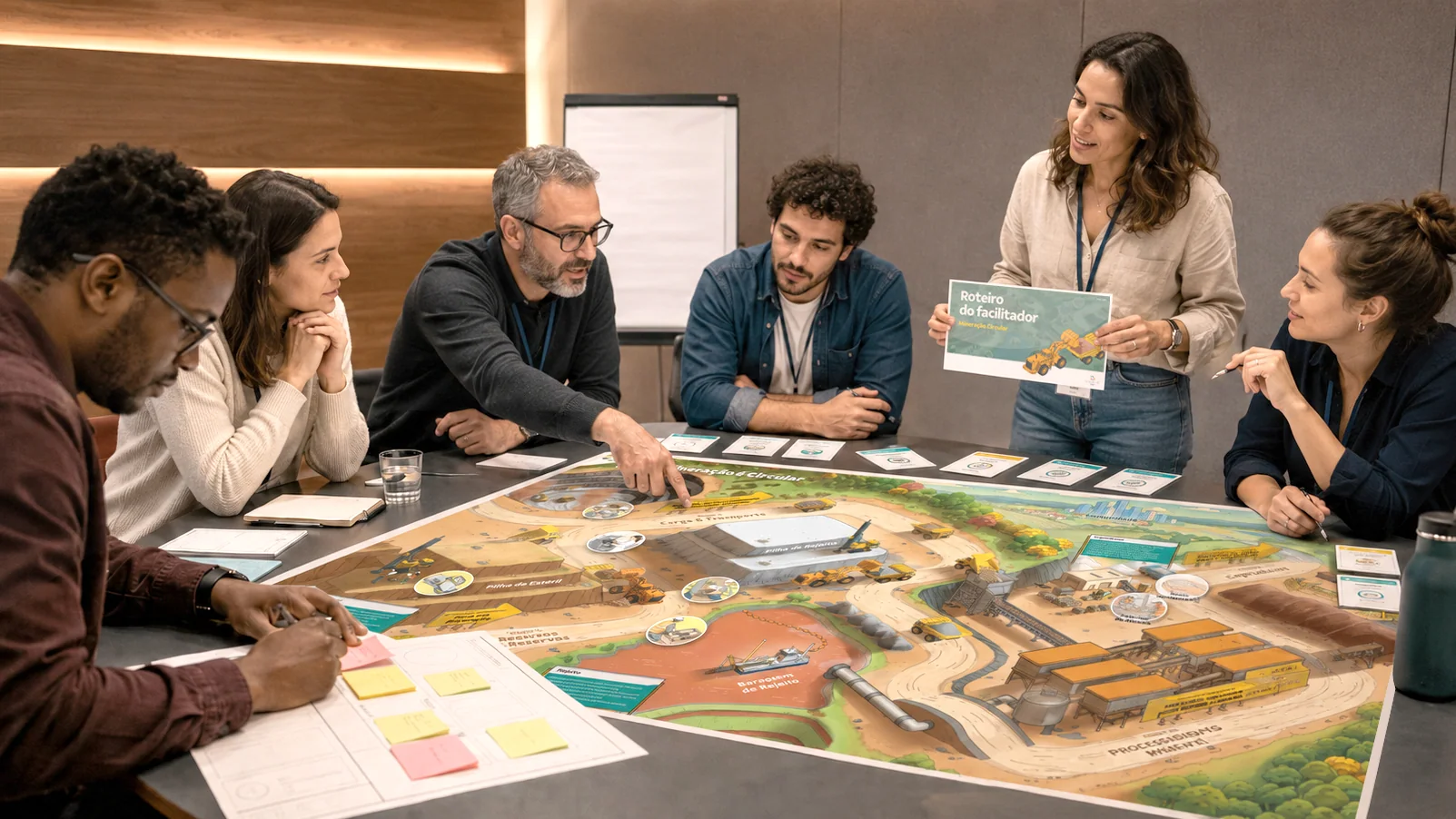
Tap a point in the photo to see what happens.
What your project can include
A custom visual narrative connecting the topic, its parts and your teams’ day-to-day reality.
Cards, questions and a session guide to support group discussion.
We prepare people on your team to lead the session. Where appropriate, qualified partners can facilitate it.
Games, apps and augmented reality experiences for exploring content and supporting learning.
Three different challenges, each with its own map, activities and application materials.
Projects are presented with company identity and selected project elements adapted for public presentation.
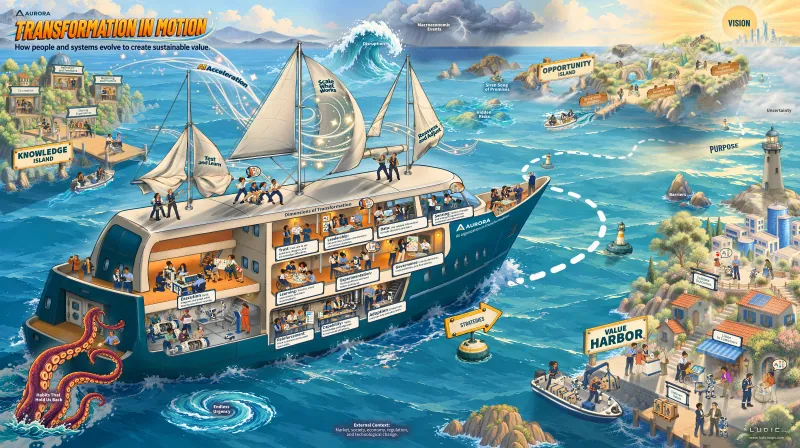
A ship in motion reveals how leadership, learning, technology and adoption connect during organizational transformation.
Open project →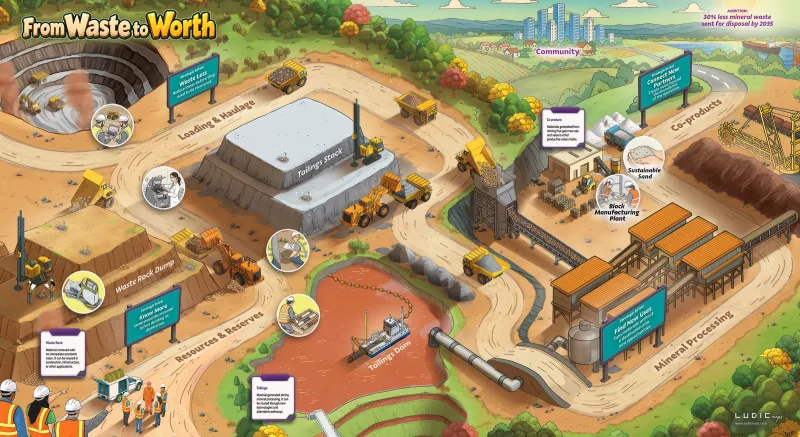
A connected view of mining operations for discussing waste reduction, material recovery, and opportunities to create value.
Open project →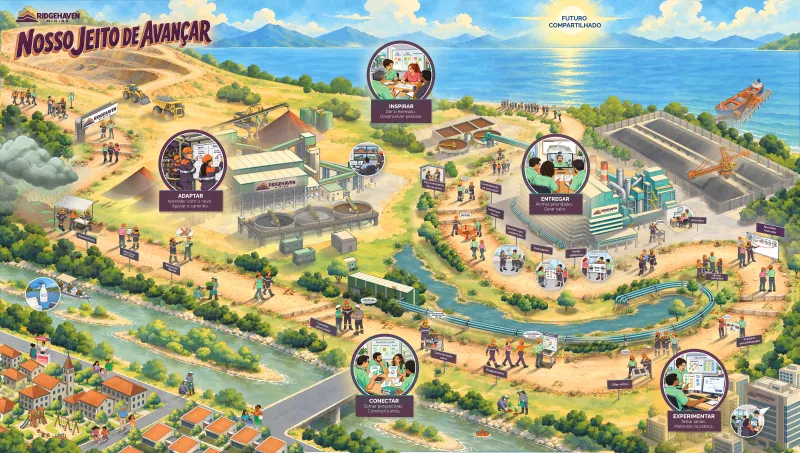
Competencies translated into situations and behaviors people can recognize in everyday industrial work.
Open project →These projects show some of the possibilities. We can explore other topics based on the challenges your team faces.
Priorities · Portfolio · Ecosystems
Values · Leadership · Onboarding
Change · Processes · Safety
Customer experience · Sustainability · ESG
About
Ludicmaps develops learning maps and interactive learning solutions, including games, apps and augmented reality experiences. We combine visual design, storytelling and technology to help people explore complex topics and connect learning to their work.
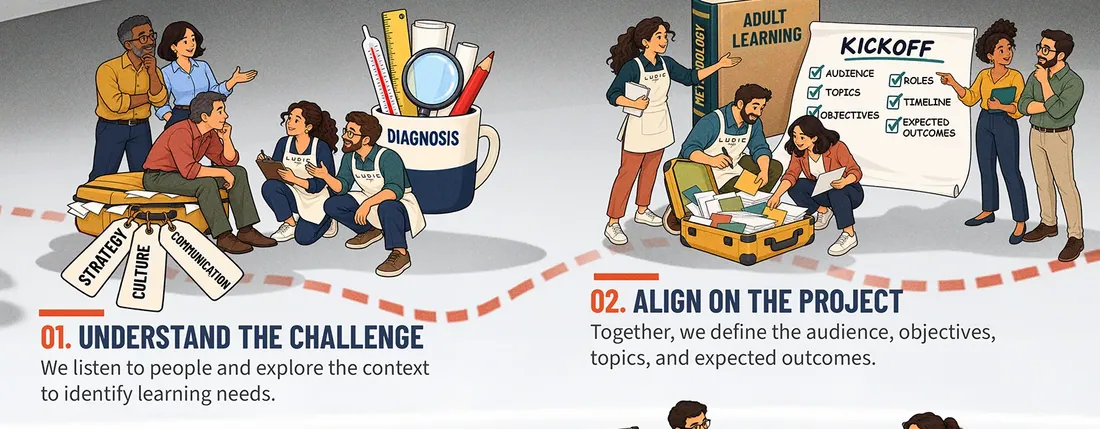
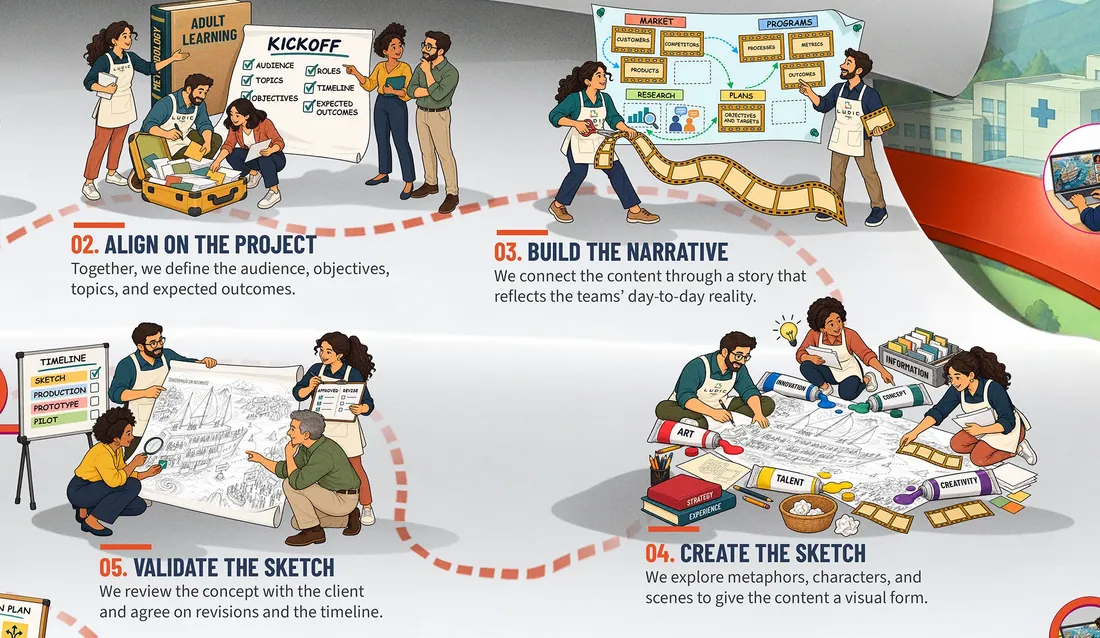
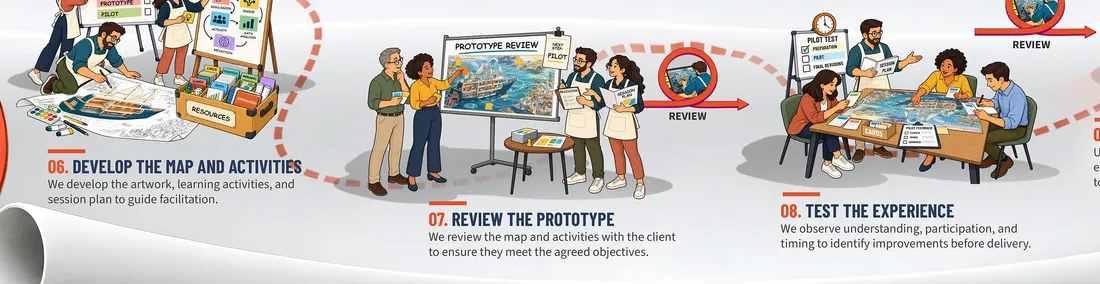
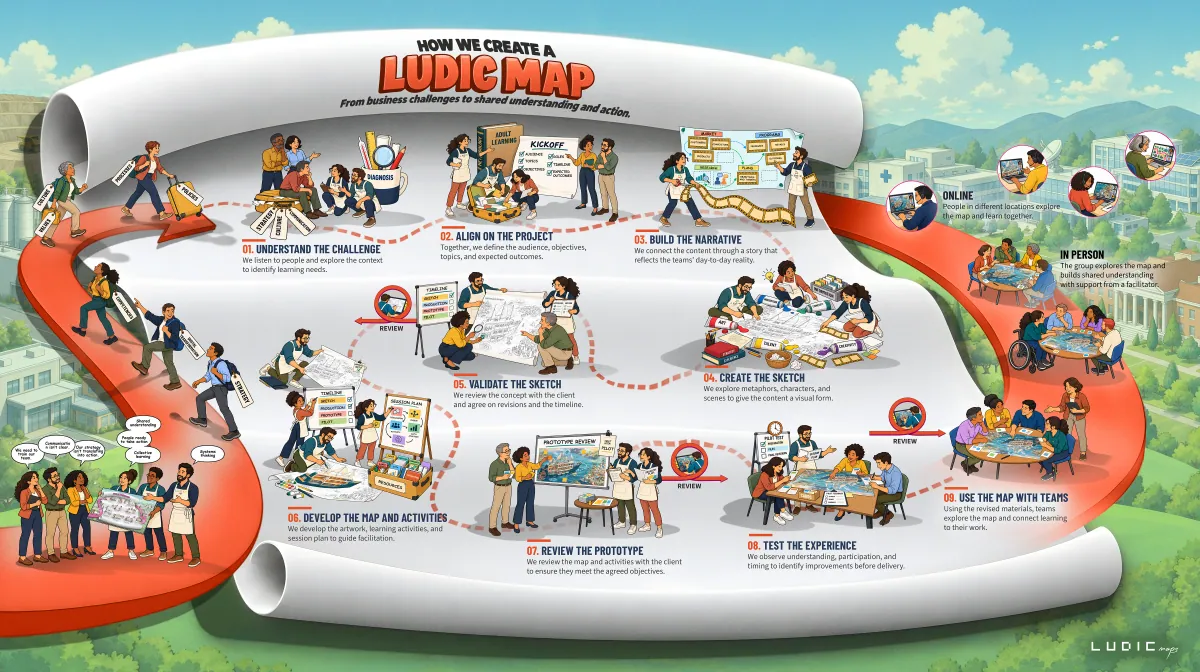
We build each map with you. We explore the context, connect the content through a narrative, develop the experience, and review the materials before they are used.
Select a stage to explore the map.
Overview
Choose a moment to zoom into the map and see what happens at each stage of the project.
Moment 1
We listen to people, explore the context, and align on the audience, objectives, and topics.
Moment 2
We connect the content through a visual narrative. You review the proposed direction before production.
Moment 3
We develop the artwork, activities, and session plan. We review the prototype and test understanding, participation, and timing to guide revisions.
Moment 4
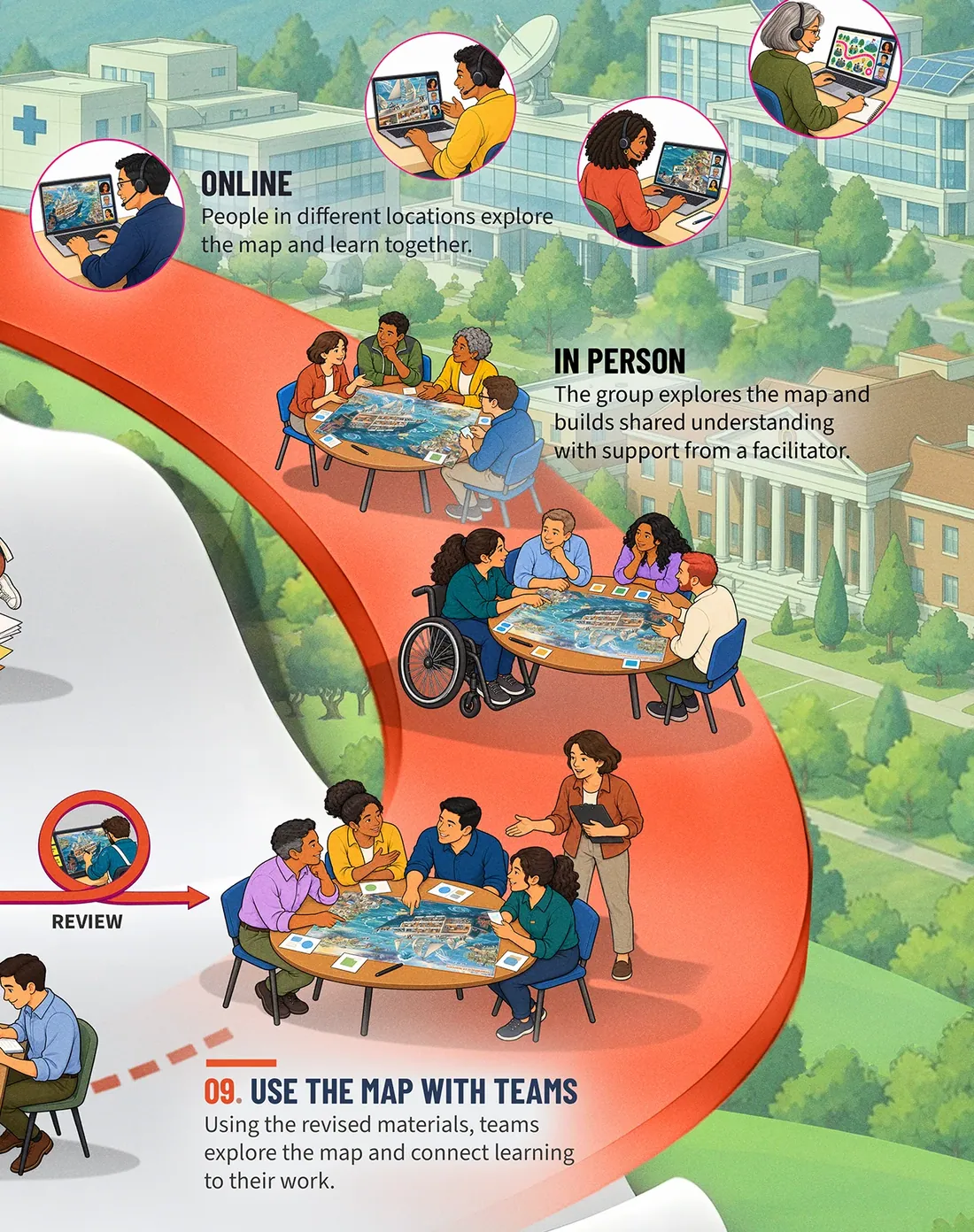
With the revised materials in place, the map is used with teams, in person or online, according to the project format.
A project can be designed for in-person sessions or online delivery. Activities, materials and facilitation are planned around the chosen format.
We plan group size and session length around the objective, the audience and the time available. These factors guide the activities and facilitation approach.
The proposal sets out a timeline for development, review and preparation for use. Planning takes into account the topic’s complexity, the materials involved and reviews with your organization.
Pricing takes into account research, storytelling, illustrations, activities, languages and required materials. The initial conversation helps define which elements fit the challenge.
You do not need finished materials to get started. Tell us about the challenge, who needs to take part and what you would like them to understand or discuss. Developing the content is part of the collaborative process.
Share the topic, the audience and what you want to work on with your team. From there, we assess how a map could help and agree on the next step.
The initial conversation helps define the scope before a proposal.
If an NDA should come first, say so in your reply and we will send ours before any detail is discussed.